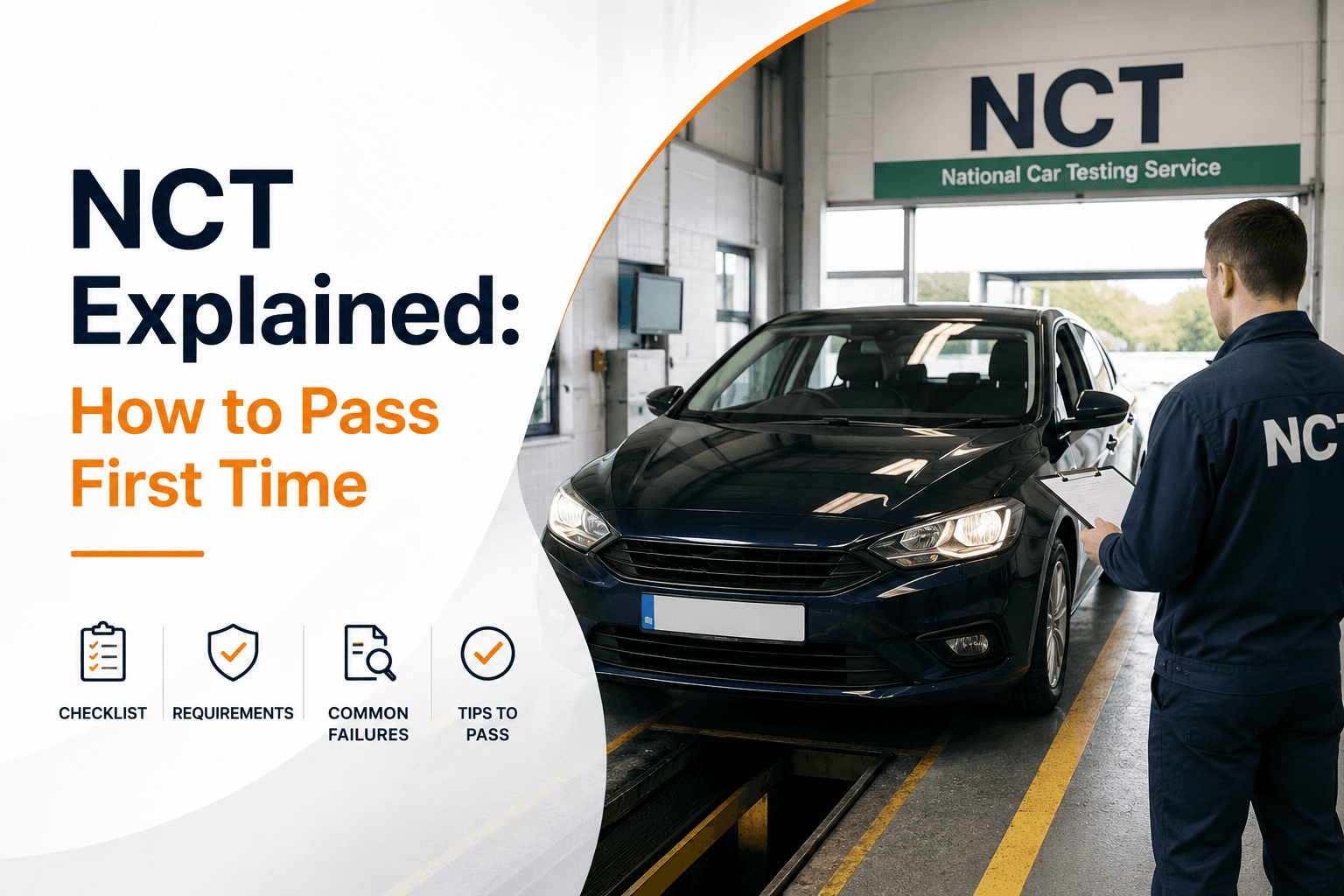
The National Car Test (NCT) is Ireland's mandatory roadworthiness inspection, and for many drivers, it is an annual source of stress and unexpected repair bills. Understanding what the test actually checks, and preparing properly beforehand, is the difference between passing first time and booking a retest three weeks later.
Whether you are buying a used car or keeping your current one on the road, here is everything you need to know about the NCT in Ireland.
What the NCT is: and when you need it
The NCT is a legal requirement for most vehicles registered in Ireland. It checks that your car meets minimum safety and environmental standards. You cannot legally drive on Irish roads without a valid NCT certificate (with limited exceptions for driving directly to a booked test).
NCT frequency by vehicle age:
- Cars 0–10 years old: every two years
- Cars over 10 years old: every year
- First NCT: due four years after first registration (for cars registered from 2011 onwards)
You can book up to 90 days before the due date without losing any time on your certificate, so if your NCT expires in September, book in June and your new cert still runs to the following September.
Book at ncts.ie, centres across Dublin include Tallaght, Finglas, Deansgrange and Mulhuddart.
What the NCT actually tests
The NCT is not a full service. It is a snapshot safety inspection covering roughly 60 items across these categories:
Lights and electrical
Headlights (dipped and main beam), indicators, brake lights, fog lights, number plate lights, horn, and wiring condition. Misaligned headlights are one of the most common failure points, and one of the cheapest to fix beforehand.
Brakes
Brake efficiency on a rolling road, handbrake performance, brake hoses and fluid condition. Worn pads showing through or contaminated fluid will fail you immediately.
Suspension and steering
Shock absorbers, springs, ball joints, track rod ends, power steering. Listen for clunks over bumps before the test; they usually mean worn suspension components.
Tyres and wheels
Minimum tread depth is 1.6 mm across the central three-quarters of the tyre. Sidewall damage, bulges and incorrect tyre sizes all fail. Check all four tyres plus the spare if your car carries one.
Emissions
CO, HC and lambda readings for petrol cars; smoke opacity for diesel. A diesel with a clogged DPF or worn injectors often fails emissions, especially if it has only ever done short urban trips.
Body and structure
Corrosion on structural points (sills, floor pans, chassis rails), sharp edges, door and bonnet operation, seat mounting, seatbelts, and windscreen condition (chips in the driver's line of sight fail).
The most common NCT failures in Ireland
Based on NCTS published data, the top failure categories year after year are:
- Lighting: blown bulbs, misaligned headlights, cracked lenses
- Suspension: worn shocks, broken springs, damaged bushings
- Brakes: worn pads, corroded discs, handbrake adjustment
- Tyres: tread below 1.6 mm, sidewall damage, wrong size
- Emissions: especially diesel DPF and EGR issues
Most of these are preventable with a pre-test check costing €50–€150 at an independent garage, or free if you know what to look for yourself.
How to prepare your car for the NCT
Work through this list the week before your test:
- Check every light: including number plate lights and the third brake light. Replace any blown bulbs (€2–€5 each).
- Measure tyre tread: use a tread depth gauge or the 20-cent coin test (insert coin into tread; if you can see all of the harp, replace the tyre).
- Top up fluids: washer fluid, engine oil, brake fluid, coolant. Low levels can fail the visual inspection.
- Clean the car: including the underside if possible. Testers need to inspect structural points; mud and underseal can hide corrosion they are required to check.
- Remove boot clutter: testers need access to the spare wheel well and rear seatbelt mountings.
- Warm up a diesel: if you drive a diesel, take it for a 20-minute motorway run before the test to clear the DPF and improve emissions readings.
- Check wipers: torn or smearing wiper blades fail. Replace them if in doubt (€15–€25 a pair).
Buying a used car? Check the NCT first
When viewing any used car, check the NCT status before anything else:
- Ask for the NCT certificate or check online at ncts.ie using the registration number
- A long NCT (12–24 months remaining) is worth real money. It saves you the €55 test fee and any repair bill to pass
- An expired or absent NCT means you are buying someone else's problem; factor in the cost and hassle of getting it through the test
Every car on our forecourt is sold with a valid NCT or fresh cert where applicable. We will not sell a car we would not put our own family in.
What happens if you fail?
You receive a VT20 (pass) or VT30 (fail) report listing every item. For failures:
- Minor defects: advisory only; you pass but should repair soon
- Major defects: fail; must be repaired and retested within 21 days (one free retest if booked within that window at the same centre)
- Dangerous defects: fail. Do not drive the car except directly for repair
Retest fee is €28 if booked within 21 days. After that, full test fee again.
NCT and imports
Japanese imports and UK imports must pass the NCT before they can be taxed and driven on Irish plates. The test checks Irish compliance, right-hand drive headlight beam pattern, speedometer in km/h, and rear fog light configuration are common issues on imports. Factor this in if you are considering an import; our guide to Japanese imports covers the full process.
Get car-buying tips in your inbox
Practical guides on finance, imports and finding the right used car in Ireland. No spam — just useful advice from our Dublin team.
The bottom line
The NCT is not designed to catch you out. It is designed to keep unsafe cars off Irish roads. A pre-test inspection, fresh bulbs, legal tyres and a clean emissions reading will get most well-maintained cars through first time. If you are buying used, prioritise cars with a long NCT remaining, or buy from a dealer who handles the test for you. Browse our current stock or read our full buying process to see how we prepare every car before sale.